
Choosing garden equipment is no longer just about stacking tools in a shed. Regulations on repairability, local noise restrictions, drought orders: the constraints governing the use of outdoor equipment have multiplied in recent years. Comparing categories of tools based on these criteria allows for distinguishing sustainable purchases from unnecessary expenses.
Motorization of garden tools: battery, gas, or corded
The type of motorization determines the noise level, autonomy, and compliance with municipal regulations. The permitted hours for using a lawn mower, hedge trimmer, or blower vary from one municipality to another. A gas model may be penalized where a battery model remains within tolerated limits.
| Criterion | Battery | Gas | Corded |
|---|---|---|---|
| Noise level | Low to moderate | High | Moderate |
| Autonomy | Limited (depending on capacity) | High | Unlimited (cable length) |
| Engine maintenance | Minimal | Regular (filter, spark plug, oil) | Minimal |
| Local noise compliance | Generally compliant | To be verified by municipality | Generally compliant |
| Repairability (spare parts) | Variable by brand | Good (mature market) | Good |
Battery models generally offer a more comfortable noise margin than gas models. For a modestly sized yard, this motorization covers most needs without the risk of a fine.
On the other hand, for larger areas, gas motorization retains an advantage in autonomy. The compromise then lies in choosing hours that comply with the current prefectural orders.
To browse the equipment available on Le Jardinier Décorateur, sorting by motorization type simplifies the pre-selection based on the size of your land and neighborhood constraints.
Repairability of garden equipment: what regulations require
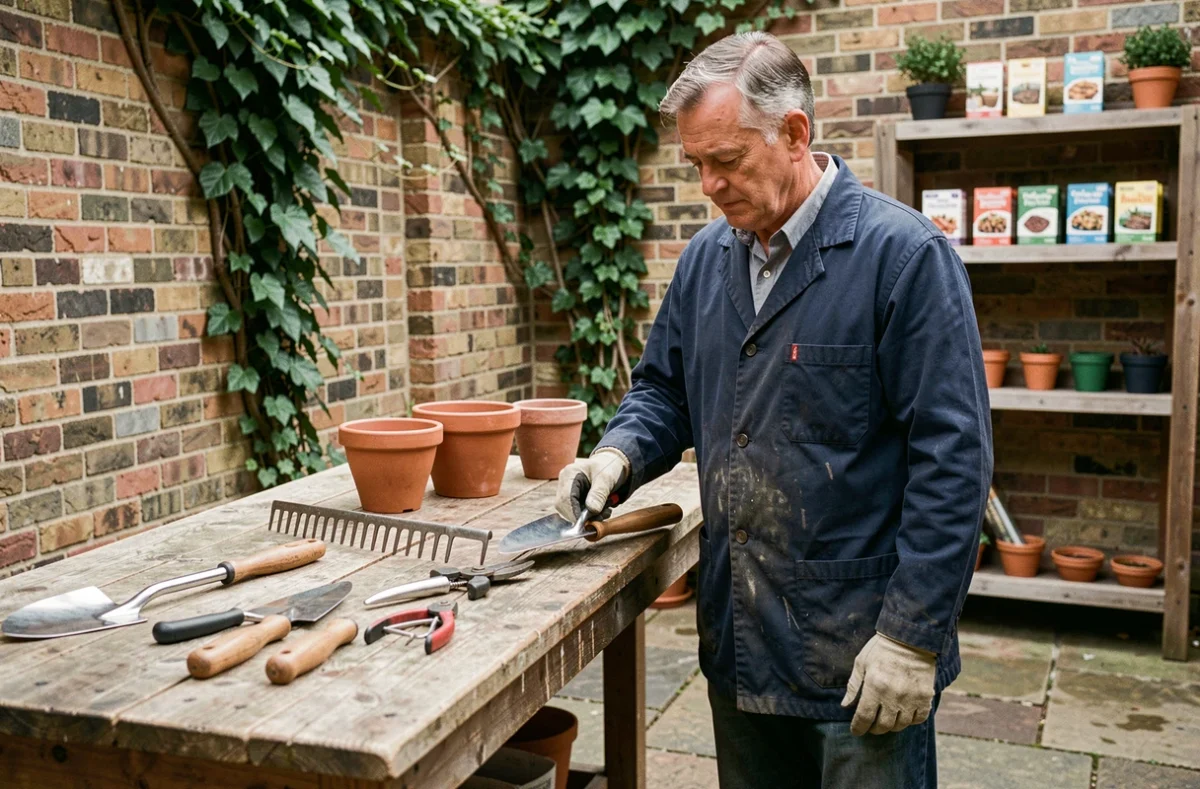
Since 2023, certain motorized gardening tools must guarantee the availability of spare parts for at least five years. This obligation changes the purchasing logic: a cheaper but irreparable tool costs more in the long run than a model whose parts remain accessible.
Parts from the circular economy can also be offered by manufacturers. This opens an alternative to new parts, often at a lower price.
Criteria to check before purchasing a motorized tool
- The duration of spare parts availability announced by the manufacturer, which must reach at least five years for the categories covered by the regulations
- The existence of a network of approved repairers or an accessible after-sales service locally, as a theoretically repairable tool without a nearby workshop poses the same problem as a disposable tool
- The compatibility of batteries with other tools in the same range, to avoid multiplying chargers and proprietary formats
An electric pruner whose battery is no longer produced after two years becomes a dead weight. Repairability is now a regulatory purchasing criterion, not a marketing argument.
Garden watering and water restrictions: adapting equipment to the territory
Drought orders operate according to four levels of vigilance and can limit or even prohibit the watering of ornamental gardens. A connected timer does not exempt one from consulting the rules in force on the VigiEau portal.
Watering equipment must be designed according to the territorial context. In an area regularly subject to restrictions, investing in a drip irrigation system offers a concrete advantage: it targets the roots and reduces the volumes consumed compared to an oscillating sprinkler.
Comparison of watering systems based on consumption
| System | Relative consumption | Adapted to restrictions | Installation |
|---|---|---|---|
| Drip | Low | Yes (targeted use) | Medium (ground installation) |
| Oscillating sprinkler | High | Often prohibited during heightened alert | Simple |
| Pore hose | Low to moderate | Yes | Simple (linear installation) |
| Connected timer | Depends on the coupled system | Helps comply with permitted hours | Medium |
A timer alone does not reduce consumption. Its value lies in the automatic adherence to permitted time slots, which avoids forgetfulness and penalties.
Outdoor decoration and garden layout: choosing durable elements
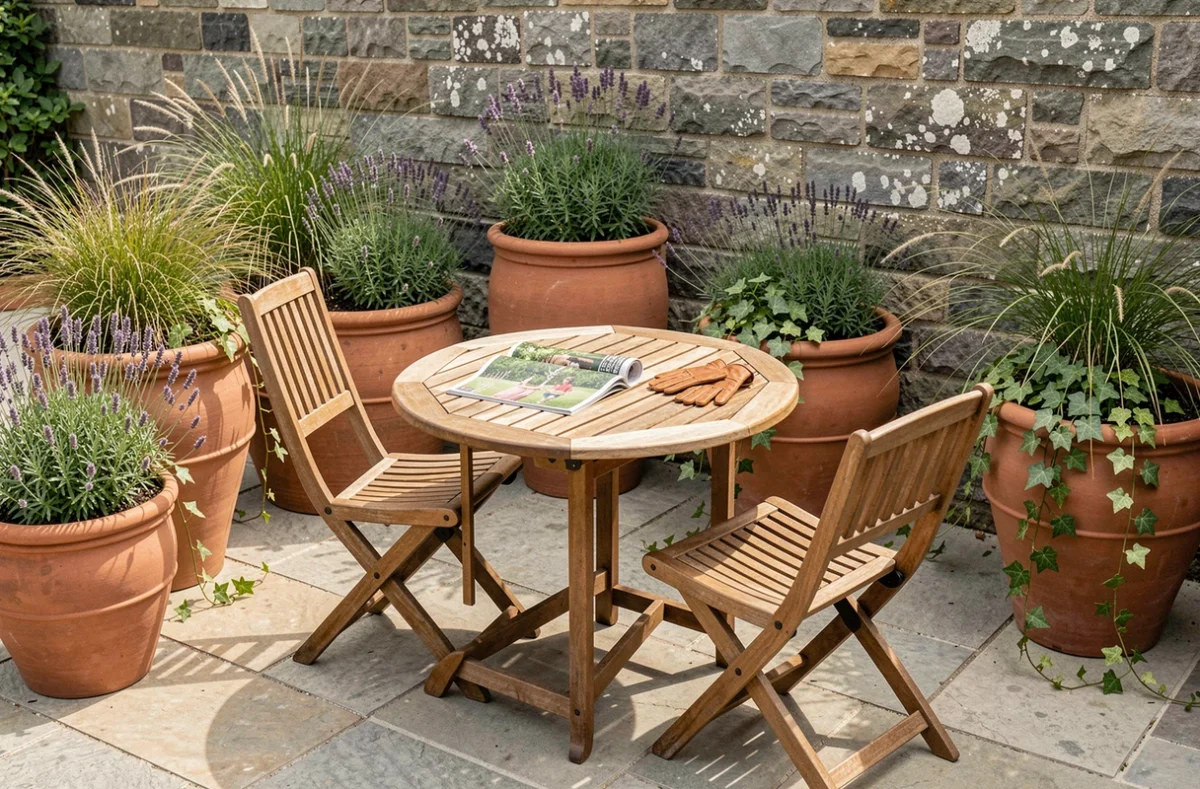
The decorative aspect of an outdoor space (terrace, pergola, raised vegetable garden) relies on materials exposed permanently to the elements. Natural wood, treated metal, and composite do not offer the same lifespans or maintenance constraints.
Untreated wood outdoors requires annual maintenance to maintain its appearance. Naturally rot-resistant species like black locust or chestnut fare better without chemical treatment than pine or spruce, which gray and degrade quickly.
For planters and boxes intended for the vegetable garden, the choice of material also affects food safety. A treated autoclave wood box of the latest generation differs from an older model with CCA. Checking the treatment standard avoids introducing undesirable substances in contact with edible plants.
Furniture and accessories: three control points
- UV resistance, which determines the durability of colors on cushions, pergola fabrics, and woven resins over the seasons
- The inherent weight of the furniture, often overlooked: a chair that is too light flies away at the first gust of wind, while a table that is too heavy becomes impossible to move alone
- The possibility of replacing worn parts (parasol fabric, cushions, bench slats) instead of the entire set
A durable outdoor layout relies on replaceable components, not on a monobloc set. This logic aligns with the repairability applied to motorized tools: prioritizing modular over disposable reduces costs over several seasons and limits bulky waste.