
Two figures: 8 kilos of muscle in a year, zero dumbbells, just an elastic band stretched between two hands and a lot of consistency. This is the kind of result that challenges preconceived notions about home training.
Why elastic bands have become essential for muscle building at home
Home muscle building has just found its accelerator. Resistance bands, with their resistance increasing as you pull, follow the natural curve of muscle contraction. The result: the muscle works at every inch, from the start to the end of the movement. Hypertrophy makes no distinction: whether beginner or advanced, everyone benefits from this evolving resistance. You can easily target each muscle group, choose your level of difficulty, and progress at your own pace, without breaking the bank on equipment or pushing the walls of your living room.
Another strong point: safety. Elasticity limits trauma. Joints absorb less shock than with dumbbells. For rehabilitation or simply to prevent injury, bands offer a reliable alternative. They fit into a bag, can be used anywhere, and integrate into all routines, from muscle strengthening to mobility. A versatile, discreet, and remarkably effective tool.
Elastic bands follow progression: to increase difficulty, simply change bands or amplify the movement. This gentle yet real progression fuels muscle growth. Today, home practitioners combine their use with apps, YouTube channels, or custom programs. To structure their sessions and optimize results, the muscle-building tips on Free Sport provide a solid foundation, adaptable to individual goals and levels.
Which exercises to prioritize with bands to effectively target each muscle group
To encompass all muscle groups without leaving anything out, exercises with bands adapt to everyone’s anatomy. The possibilities are vast, but some classics remain essential for building an effective routine:
- Biceps and triceps: Bicep curls are performed by placing the band under your feet, while tricep extensions require an anchor point, a door, or a solid support. This continuous resistance optimizes activation and encourages progression.
- Chest and shoulders: To strengthen the upper body, presses or flys with the band passed behind the back or secured behind you engage the chest. Lateral raises target the shoulders and enhance overall stability.
- Back and abs: Rowing, with the band secured under the feet or attached to a support, strengthens the back and improves posture. Pulls and rotations deeply activate the abdominal core.
- Legs and glutes: Squats, lunges, and hip abductions take on a new dimension with a resistance band. Position the band around your thighs or under your feet, and adjust the tension to intensify the work on your legs and glutes.
The diversity of exercises, the ease of adjusting intensity, and the gain in coordination distinguish resistance bands. They easily integrate into varied routines, from targeted strengthening to preventing lower back pain. Personalization remains the driving force behind effective muscle development.
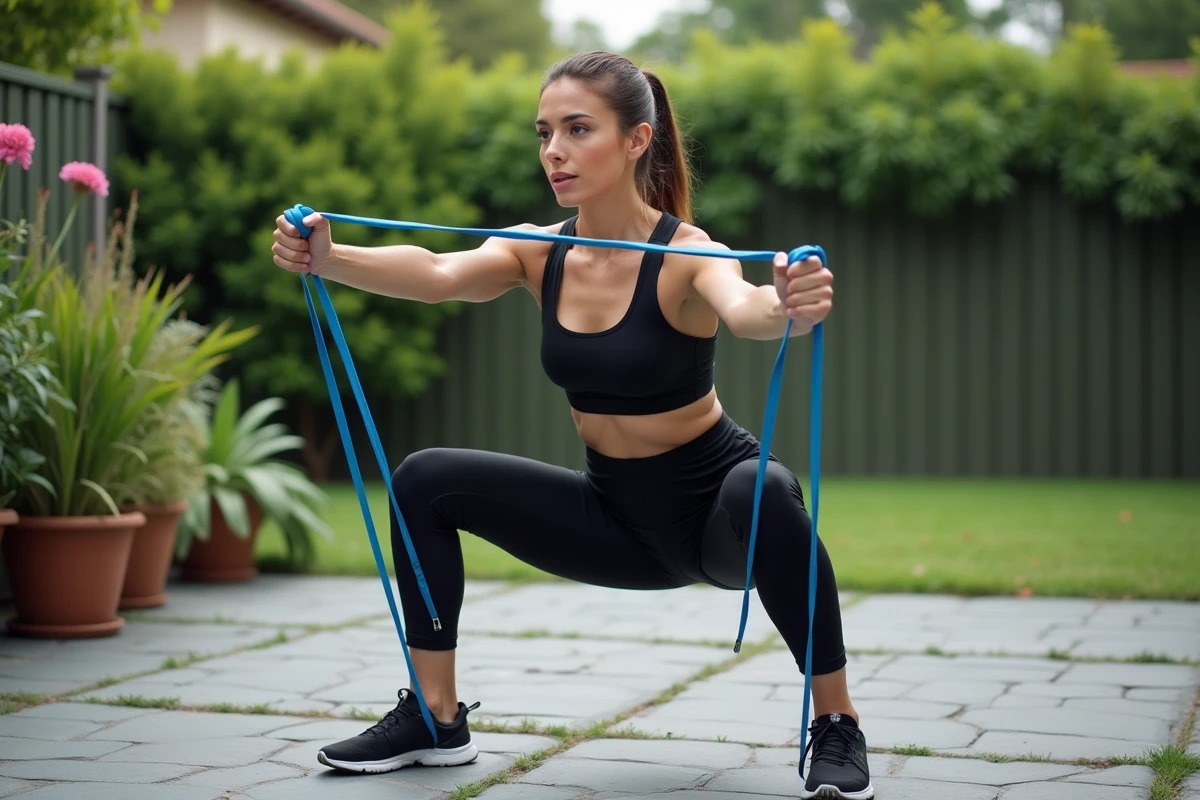
Small tips and practical advice for progressing quickly without injury
Stability is key. Before each exercise, find solid supports. Control the tension of the band, adapt it to your level, and always prioritize execution quality. It’s better to perform one well-executed movement than to rush through repetitions that could lead to injury.
To progress, structure your sessions. Integrate progressive overload: gradually increase resistance or the number of repetitions. On main exercises, push to muscle failure, but don’t neglect form. Resistance bands allow for a less abrupt increase in intensity than with traditional weights, which spares the joints.
A careful warm-up precedes each workout: a few minutes of dynamic movements to mobilize muscles and joints, followed by a gradual ramp-up with the bands. After the effort, take time to recover and stretch. Hydration is non-negotiable: it’s the key to sustainable performance and good recovery.
Finally, vary the exercises, angles, and grip on the band. This diversity multiplies stimuli and supports progression. At the slightest abnormal pain, stop immediately and reassess the load or technique. It’s better to adjust than to regret.
Strength is not only measured by the kilos lifted but by consistency and the ability to listen to your body. With a few elastic bands and a solid plan, results often exceed expectations. It’s up to each person to write the next chapter of their muscle story, resistance by resistance.