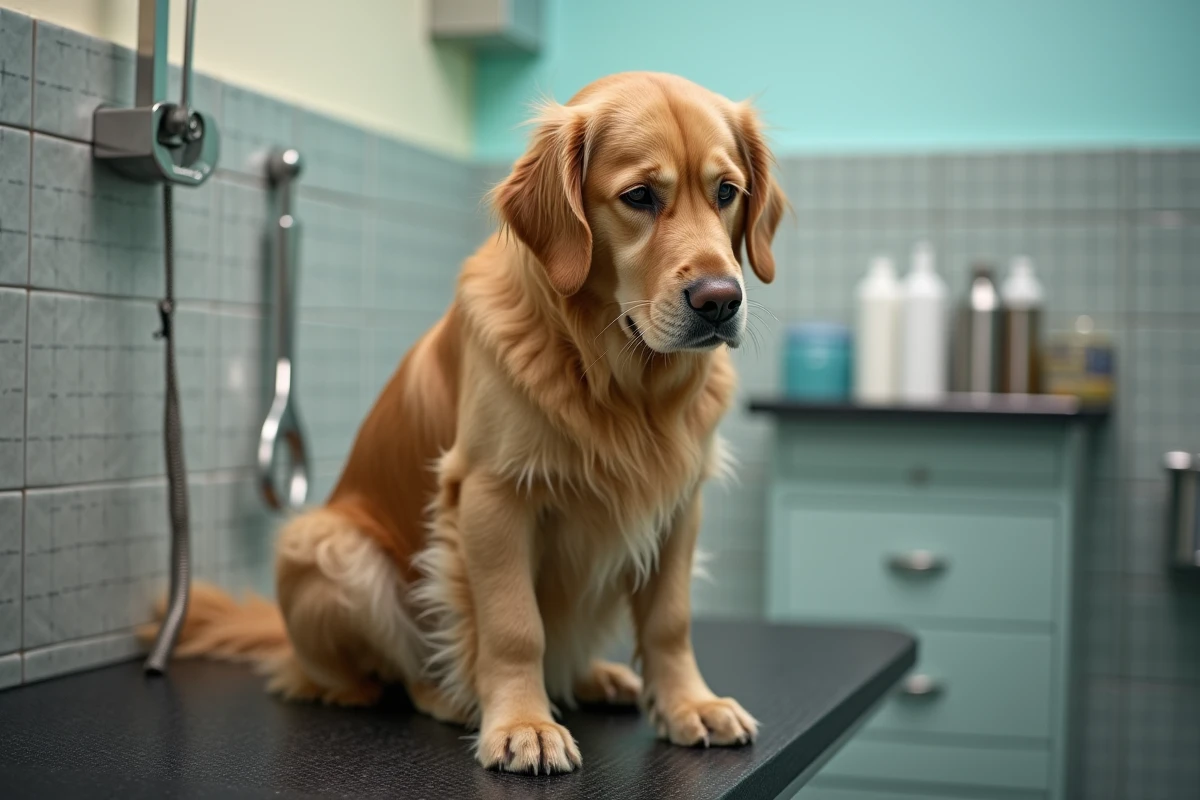
Your dog comes back from grooming and, instead of proudly parading with its new haircut, it lies down in a corner, refuses to play, or looks at you with a dull expression. This lethargic behavior after grooming worries many owners. It can be explained by several physiological and sensory mechanisms that can be alleviated with a few simple adjustments.
Post-grooming stress in dogs: what happens in their bodies
It is often thought that if the grooming session went well, the dog should be fine afterward. The body tells a different story. A study published in the journal Animals (MDPI) in 2024 shows that heart rate and cortisol levels remain elevated for several hours after grooming, even when the session went without visible incident.
Cortisol is the stress hormone. When it remains high, the dog may seem lethargic, distant, or unusually calm. This is not depression in the human sense, but a form of nervous exhaustion. The animal’s nervous system has been engaged for an extended period by the noise of the clippers, handling, product smells, and the presence of other animals.
You may have noticed that after a day filled with stimuli, all you want is silence? This is exactly what your dog is experiencing. Its body needs to wind down, and this can take anywhere from a few hours to a whole day. To better understand the causes of a dog feeling down after grooming on Animal News, it is important to distinguish this physiological fatigue from a real medical issue.
Change of coat and sensory discomfort after clipping
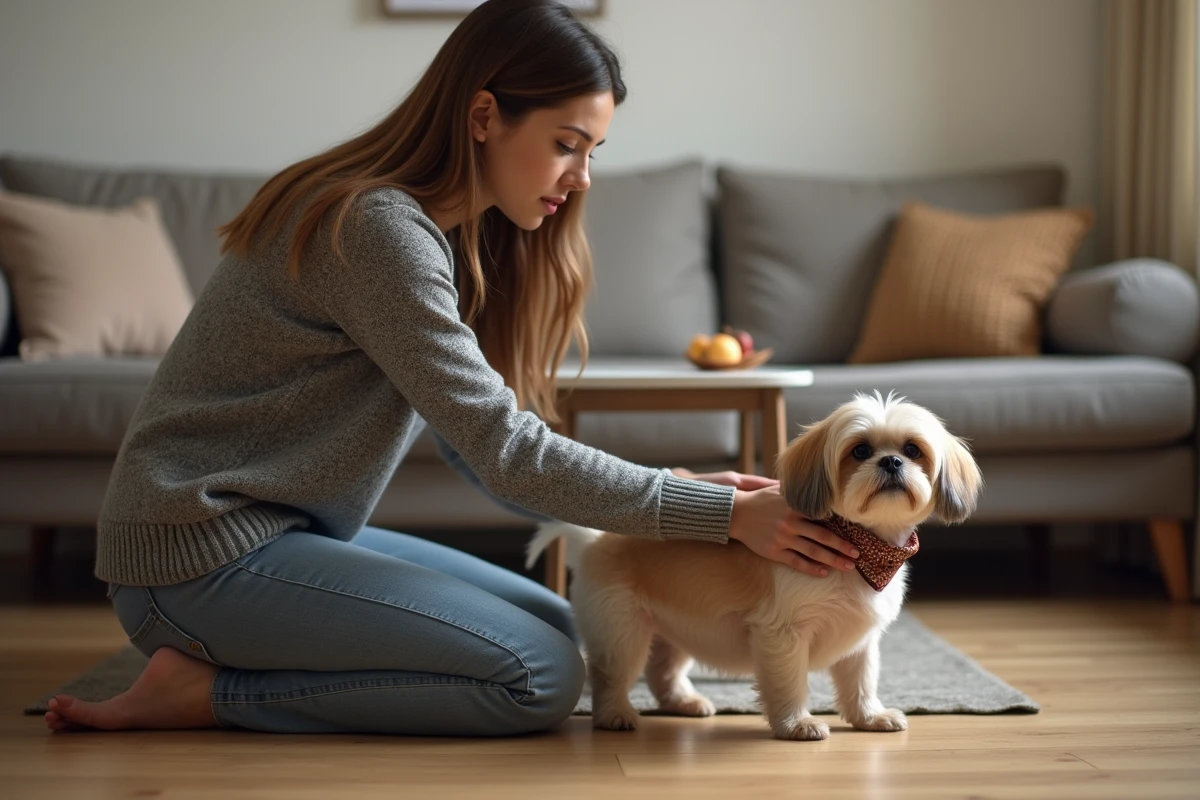
One factor that owners often underestimate is the abrupt change in bodily sensations. When a dog goes from a long, dense coat to a short cut, everything changes for it: the feel of the air on its skin, the perceived temperature, the way surfaces touch its body when it lies down.
Imagine having your head shaved in the middle of winter. You are not injured, but the sensation is disorienting. For a sensitive dog, this loss of sensory reference leads to social withdrawal. It may lick itself, scratch, stay lying down, or avoid contact.
The specific case of breeds with dense undercoats
Dogs with a thick undercoat (such as Australian shepherds, huskies, golden retrievers) are particularly affected. Their fur plays a role as thermal insulation in both directions: against the cold and against the heat. An excessively short grooming disrupts this natural regulation and can cause discomfort that the dog expresses through apathy.
Groomers specializing in a “slow grooming” approach now recommend gradual intermediate cuts rather than a radical change. The idea is to acclimate the dog in stages, over several spaced sessions, so that the difference in sensation remains manageable.
Warning signs: when lethargy hides a veterinary problem
A calm dog after grooming is normal. A dog that cannot stand, vomits, or pants excessively is an emergency. The distinction between temporary fatigue and a medical issue is crucial.
Emergency veterinarians report that marked lethargy after grooming can mask heatstroke, especially if the dog has been waiting in a car or in a poorly ventilated area. Signs to watch for include:
- Intense panting that does not decrease at rest, accompanied by unusual drooling
- Vomiting or diarrhea within hours after the session, especially in an older dog
- Inability to stand or loss of balance, which may indicate a neurological problem unrelated to stress
- Whining when touched in certain areas, which may indicate skin irritation or a clipper burn
If your dog shows any of these symptoms, contact your veterinarian without delay. Lethargy lasting more than 24 hours always warrants medical advice.
Helping your dog recover after grooming
The good news: in the vast majority of cases, a few gestures are enough for your pet to regain its usual energy.
Create a decompression zone
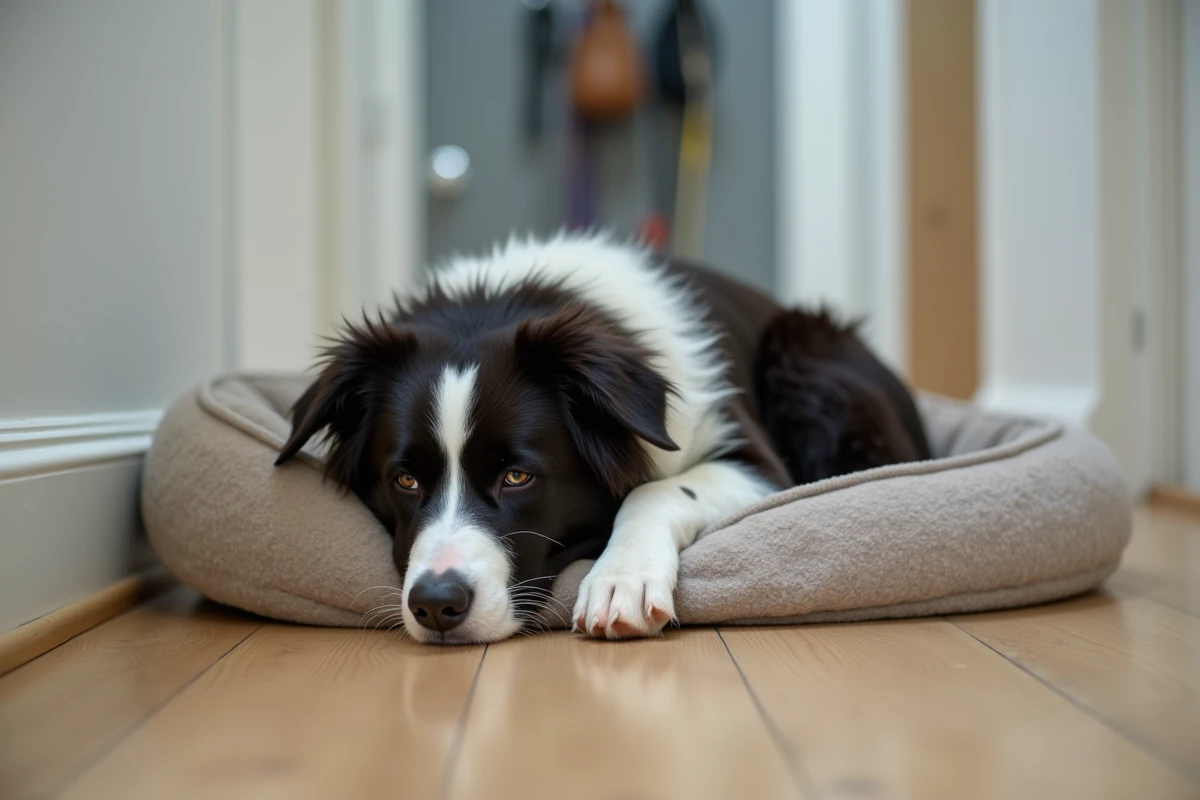
Upon returning from grooming, avoid additional stimuli. No immediate walk in a crowded park, no intense play with the kids. Settle your dog in a quiet place it knows well, with its bed and fresh water. Calm is the best remedy for post-grooming stress.
Let it come to you when it is ready. Forcing contact or petting it insistently “to reassure it” can have the opposite effect and prolong its state of withdrawal.
Adjust the frequency and intensity of sessions
If your dog consistently shows signs of lethargy after each grooming, the issue likely lies in the format of the session itself. Here are some concrete suggestions:
- Split the grooming into two appointments (bath and drying one day, cut the following week) to reduce the duration of stress exposure
- Ask the groomer to work without a high-velocity dryer if your dog is sensitive to it, as the noise and hot air can compound stress factors
- Opt for more frequent but shorter sessions, so the dog associates grooming with a brief and manageable moment
The role of gradual familiarization
A dog discovering the grooming salon as an adult will almost always have a harder time than a puppy accustomed early on. If you adopt an adult dog, discovery visits without grooming reduce anxiety for subsequent sessions. The animal explores the place, meets the groomer, and leaves without undergoing any handling. This positive memory changes the game.
Lethargy after grooming is not inevitable. It reflects real physiological stress, sometimes amplified by a sudden sensory change. By adapting the pace of sessions, choosing a groomer attentive to animal well-being, and allowing for appropriate recovery time upon return, most dogs regain their normal behavior within a few hours.