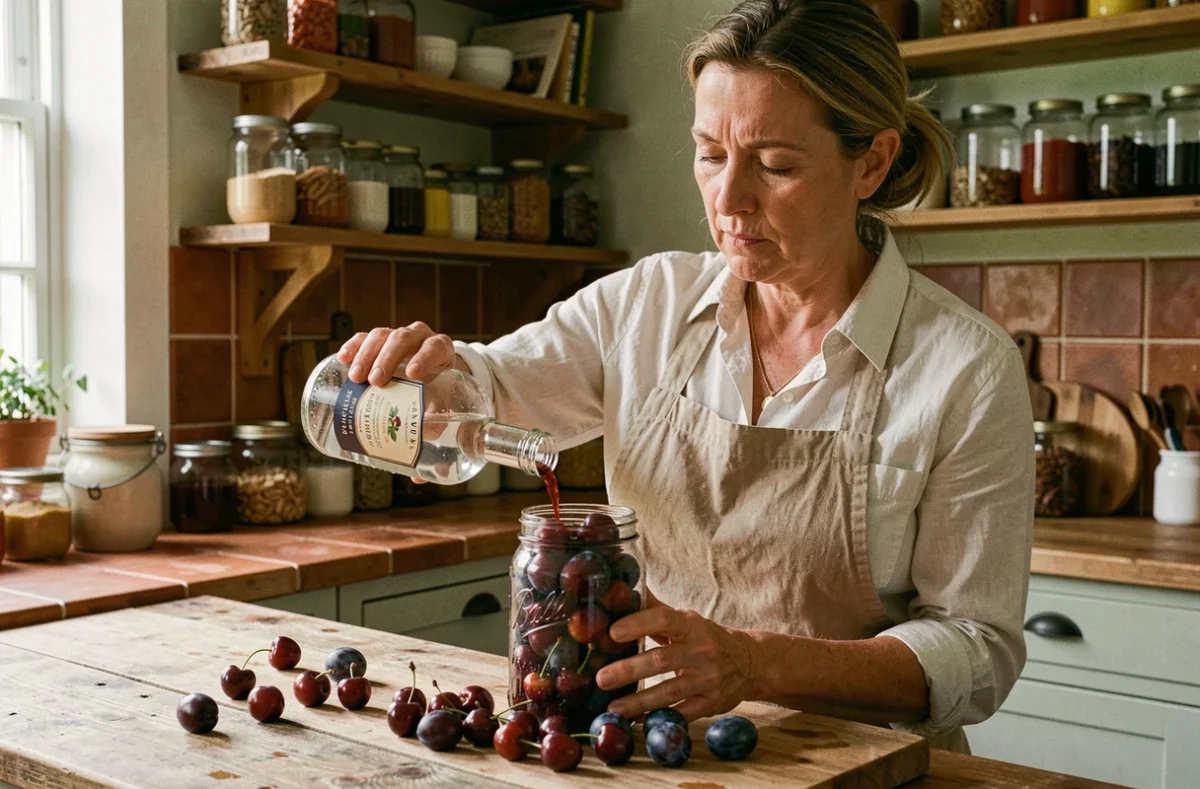
You open a jar of cherries in alcohol prepared the previous summer, and your first instinct is to smell it: if the fruit’s aroma comes through, you’re in the clear. If a sharp or chemical smell takes over, the problem rarely comes from the cherries. It usually comes from the bottle of alcohol you chose in the first place.
Making homemade fruit in alcohol with 90-proof alcohol intended for this purpose starts with ensuring that what goes into the jar is undenatured ethanol made for food use—not a household solvent with the same strength printed on the label.
Food-use labeling: the only reliable criterion before alcohol strength
On store shelves or online, two bottles of 90-proof alcohol can look so similar that they’re easy to confuse. One is labeled “alcohol for fruit” or “food-grade ethyl alcohol”; the other is household alcohol intended for cleaning. They have the same alcohol strength, but their compositions are radically different.
Household alcohol contains denaturants (Bitrex, methyl ethyl ketone, or other bittering agents) that make it unfit for consumption. These additives allow manufacturers to avoid excise duties on spirits, which explains the much lower price. Food-grade alcohol, by contrast, is pure ethanol subject to higher taxes.
The term “pharmacy alcohol” is not enough to establish that a product is suitable for cooking. Some alcohols sold in pharmacies are modified or denatured. For maceration, check explicitly that the product is undenatured food-grade alcohol. The intended use stated on the label is what matters—not the alcohol strength or where it’s sold.
Before preparing a batch of mirabelle plums or other plums, the safest approach is to buy food-grade 90-proof alcohol for fruit with packaging that clearly states it is intended for culinary use.
Dilution during maceration: why starting at 90 proof changes the final result
It’s often said that 40- or 45-proof alcohol works just as well. That’s a reasonable argument for a short maceration of spices or citrus zest. Whole fruits, which are full of water, are a different matter.
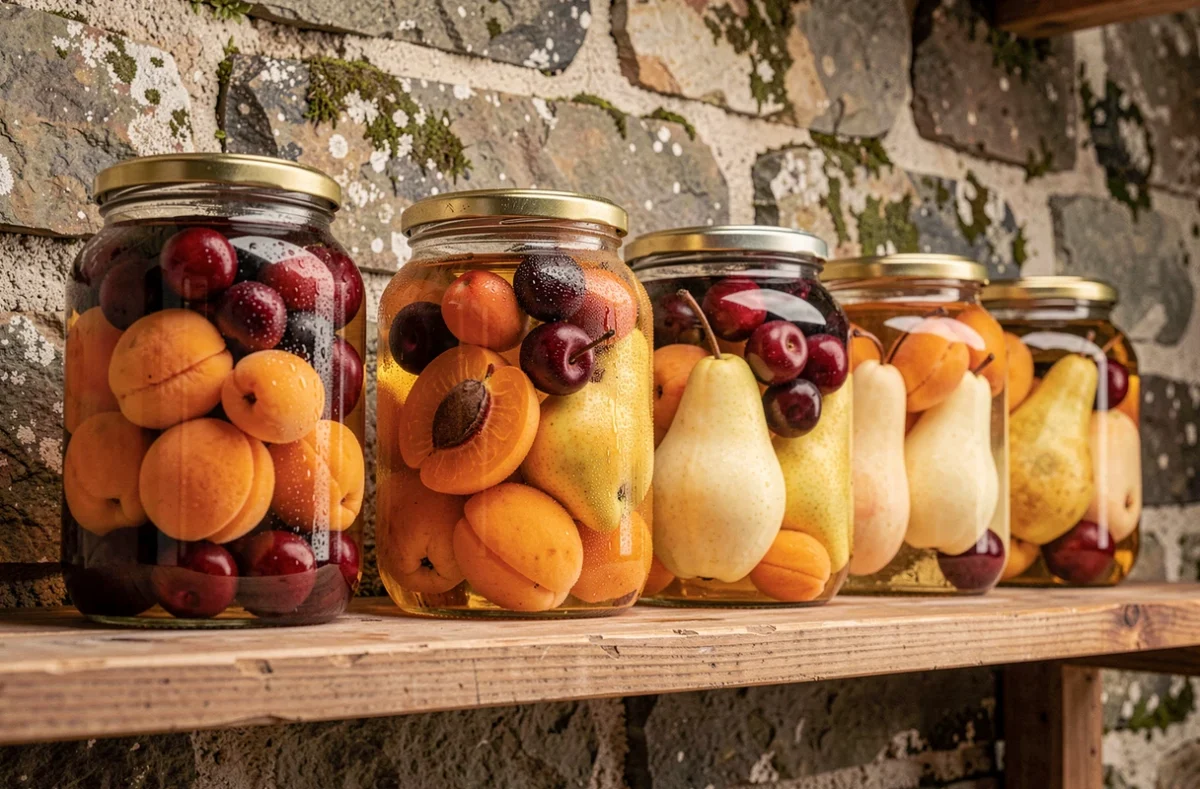
Cherries, peaches, and plums release a significant amount of juice over several weeks. This water dilutes the alcohol in the jar. Adding sugar as a syrup dilutes it even further. Starting with 90-proof alcohol compensates for this loss of strength and keeps the alcohol level high enough to extract the flavors and preserve the mixture for several months.
With 40-proof alcohol, the effective strength in the jar can fall below the level needed for reliable preservation, especially if the fruit is very juicy. The risk isn’t necessarily visible fermentation, but a gradual loss of aromatic freshness and a deterioration in texture.
Fruit brandy and alcohol for fruit: two different products
Fruit brandy is a drink made by distilling fermented fruit. It has its own distinctive flavor. Alcohol sold “for fruit” is a neutral base with no pronounced flavor, intended to capture the aromas of the fruit added to it. Confusing the two is like comparing a cooking ingredient with a sipping spirit.
For homemade maceration, a high-proof neutral base lets the fruit shine. Fruit brandy adds its own notes, which can produce an interesting result, but one that’s less predictable. The choice depends on your goal: preserving the fruit’s true flavor or creating a more complex blend.
How to get maceration right: what matters as much as alcohol strength
High alcohol strength alone does not guarantee good preservation. Several practical factors determine the quality of the result, and neglecting them can undo the benefits of using good alcohol.
- The condition of the fruit: damaged or blemished fruit, or fruit that hasn’t been dried thoroughly after washing, can introduce microorganisms and residual water that compromise the maceration. Choose sound, ripe fruit and dry it carefully before placing it in the jar.
- Keeping the fruit fully submerged: any piece of fruit sticking out of the alcohol is exposed to air and may develop mold. Keep the fruit below the liquid level, adding a little more alcohol along the way if the level drops.
- The jar: use a clean, airtight glass container. Plastic can react with concentrated ethanol and affect the flavor. Also avoid metal lids, which can rust when exposed to alcohol vapors.
- Storage: keep the jar in a cool place, away from direct light. Heat speeds up evaporation and alters the balance of flavors.
Checking the jar during the first few weeks helps you spot a problem before it ruins the whole batch. A film on the surface or a sour smell indicates contamination.
Ingredients and labeling: how to read a bottle of 90-proof alcohol before buying
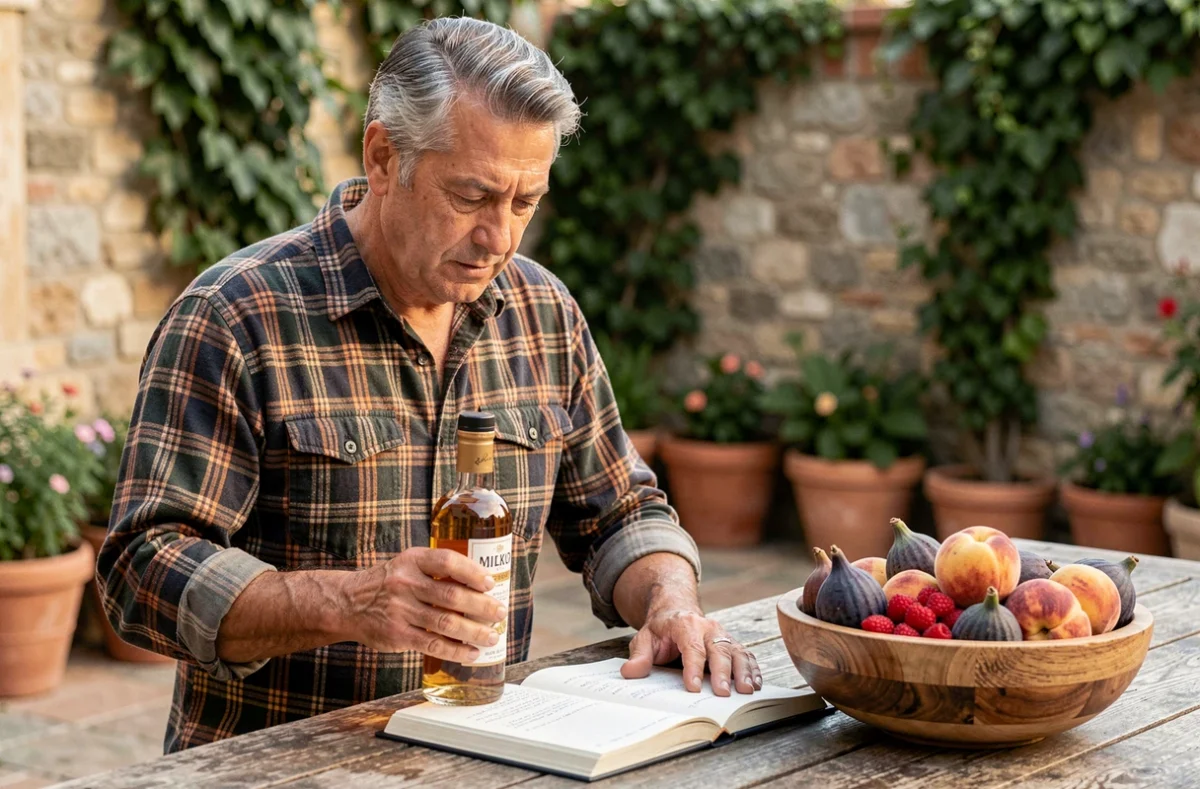
In supermarkets, bottles of 90-proof alcohol intended for fruit are generally found in the cooking or baking aisle, not the household cleaning aisle. The location is a first clue, but the label is what counts.
A product suitable for food maceration will list:
- “Ethyl alcohol of agricultural origin” or “food-grade neutral alcohol,” confirming that it contains no denaturants
- The alcohol by volume (90% ABV for the most common products used to macerate whole fruit)
- The volume and price per liter, which are useful for comparison: the high cost compared with a standard spirit is due to the excise duties applied to undenatured ethanol
A bottle that doesn’t state that it is intended for food use, or that says “household use” in small print, is not suitable. An unusually low price for 90-proof alcohol is another warning sign: denaturants make it possible to avoid the tax, resulting in a significant price difference compared with a food-grade product.
Making homemade fruit in alcohol is simple, as long as you don’t take chances when choosing the alcohol. A bottle clearly labeled for food use, 90-proof alcohol strong enough to withstand dilution from the fruit, and sound fruit kept fully submerged: these three things are all you need for a jar that keeps well and tastes of fruit, not solvent.