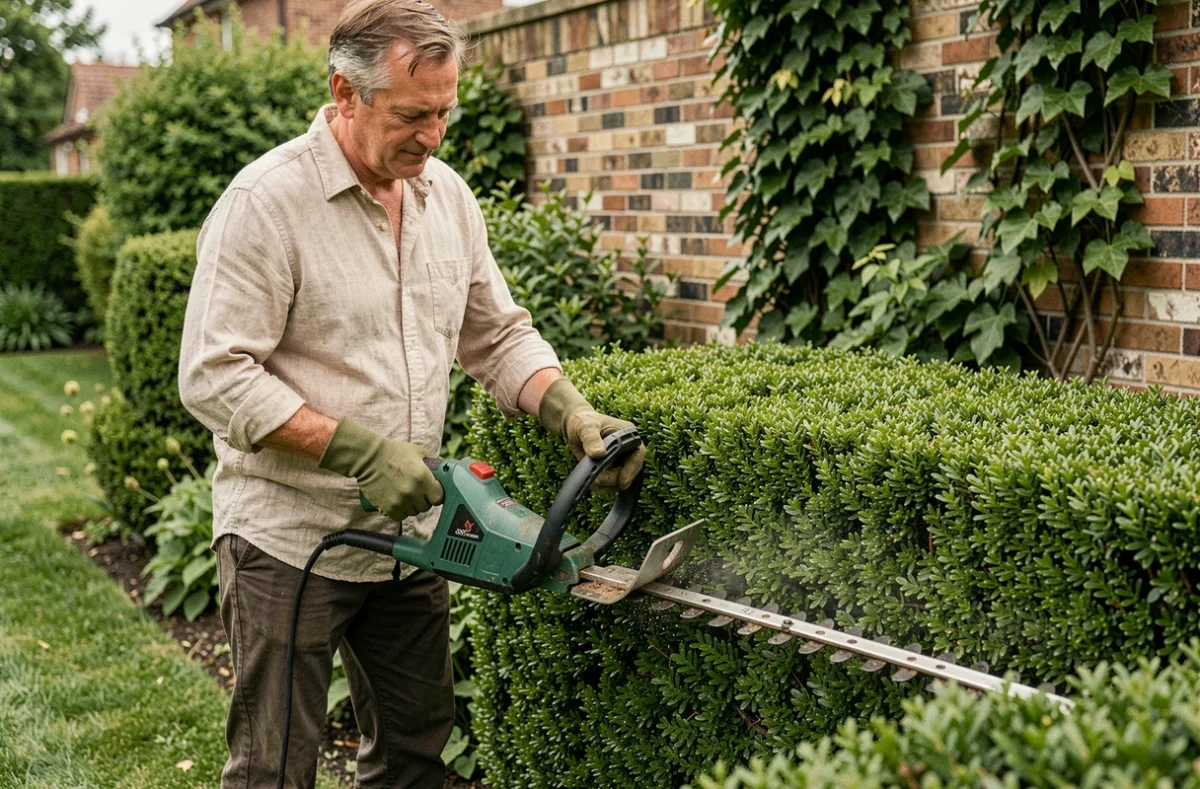
A hedge trimmer is defined by three technical specifications: its power source (corded, battery-powered or petrol), blade length and tooth spacing. These three factors determine both the type of vegetation the tool can cut and how tired you feel after an hour of work. Choosing a high-performance model for regular garden maintenance means understanding what each specification changes in practice, including the tool’s lifespan.
Replaceable battery and EU regulations: a key factor for a sustainable choice
Battery-powered models dominate the consumer hedge trimmer market. Their runtime is sufficient for most gardens, and having no cord or fuel makes them easier to handle. The problem arises after a few seasons, when the battery starts to lose capacity.
The European battery regulation provides for removal and replacement requirements for certain portable batteries incorporated into products, as well as minimum availability requirements for replacement batteries, starting on 18 February 2027. The specific requirements depend on the product and the exemptions set out in the regulation.
Before buying, check two things: can the battery be removed by the user or a repair technician, and does the manufacturer sell compatible battery packs separately? A model with a battery that is soldered in place or impossible to find after three years becomes waste, even if the motor still works. On taille-haie-warrior.com, product pages let you compare battery platforms shared across tools from the same manufacturer, helping extend the period for which replacement cells are available.
Choosing a battery platform shared across several tools reduces the risk of obsolescence. If the same battery powers a hedge trimmer, brush cutter and leaf blower, the manufacturer has a commercial incentive to keep producing that battery format for much longer.

Tooth spacing and blade length: choosing the right tool for your hedge
The spacing between the blade teeth determines the maximum branch diameter the hedge trimmer can cut cleanly. Wide spacing is suitable for informal hedges with thick branches. Narrow spacing produces a neat cut on fine foliage such as boxwood or privet.
Blade length affects how quickly you can work along the hedge. A short blade is easier to manoeuvre when shaping hedges or working in tight spaces. A long blade reduces the number of passes needed on a straight hedge.
- Conifer hedge (thuja, Leyland cypress): medium tooth spacing, long blade. Steady growth produces uniform branches, and the length of the hedge makes a blade that covers more ground per pass worthwhile.
- Informal hedge (hornbeam, hazel, hawthorn): wide tooth spacing, medium blade. Woody branches at the end of the season require enough space between the teeth to prevent the blade from jamming.
- Low ornamental hedge (boxwood, honeysuckle): narrow tooth spacing, short blade. Precision matters more than speed, and the branches are rarely more than a few millimetres in diameter.
The weight of the whole tool (motor, blade and battery) becomes a limiting factor once the hedge is taller than shoulder height. For regular annual use, a lightweight tool with a medium-length blade is often the best balance of comfort and efficiency.
Hedge trimming and nesting: what the law actually requires of homeowners
The ban on trimming from 16 March to 15 August applies to farms subject to the Common Agricultural Policy (CAP) rules. It does not automatically apply to homeowners working in their gardens. This common misconception leads some gardeners to put off maintenance unnecessarily or, conversely, to trim without taking precautions.
For homeowners, destroying a nest or breeding site belonging to a protected species is prohibited, regardless of the time of year. Before starting the hedge trimmer between March and July, a visual inspection of the hedge is sufficient in most cases. An occupied nest can be identified by birds flying back and forth, twigs gathered within the foliage or alarm calls as you approach.
If you spot a nest, postpone trimming the affected section. The rest of the hedge can be maintained as usual. Local rules or regulations for protected areas may impose additional restrictions: for example, a municipal order or a Natura 2000 site management plan may set specific dates.
Petrol or electric power: when a petrol model still makes sense
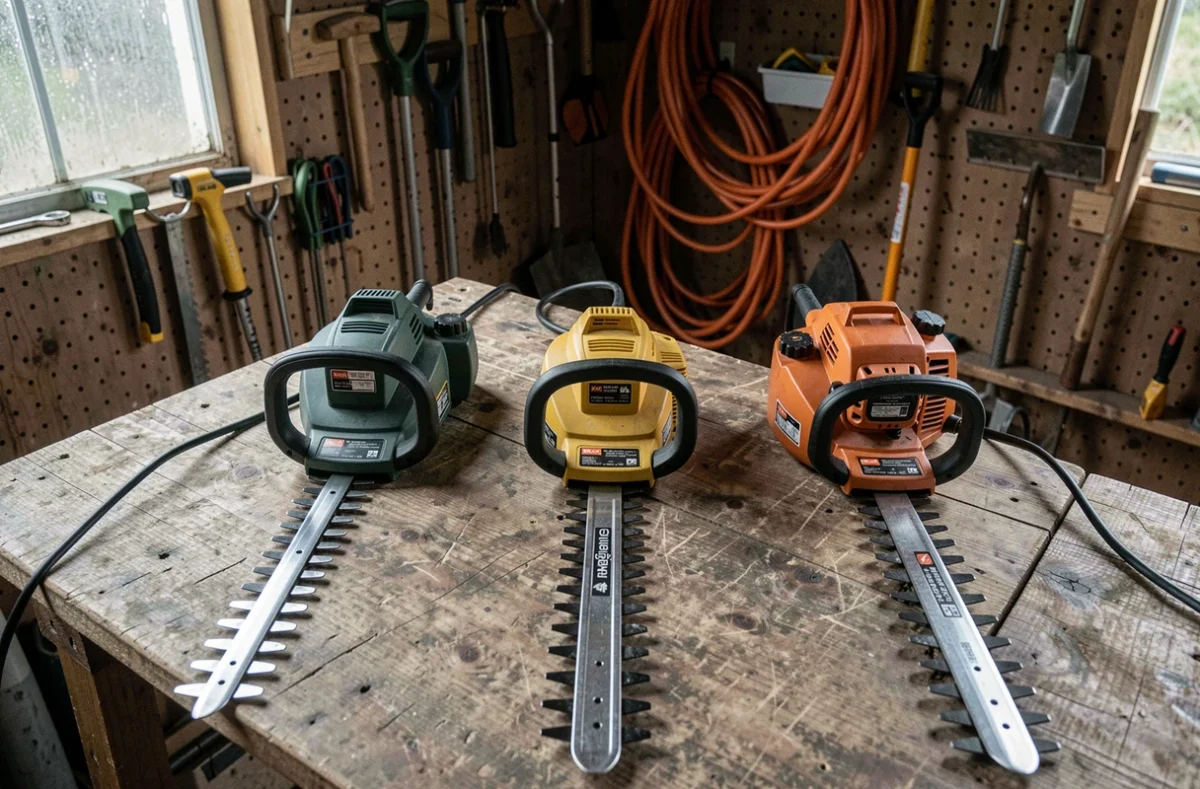
A petrol hedge trimmer has an advantage in one specific situation: very long hedges, far from any power outlet, with thick branches. The petrol engine delivers consistent power regardless of battery charge, and runtime is limited only by the size of the fuel tank.
In other situations, electric models (corded or battery-powered) meet the needs of most residential gardens. Corded models are the lightest and least expensive, but the cable limits their range. Battery-powered models offer mobility and enough power for branches of a typical diameter.
Noise levels also clearly distinguish the two types. Petrol models exceed comfortable noise levels by a wide margin and require hearing protection. A battery-powered model lets you work early in the morning or late in the day without disturbing the neighbours, giving you more flexibility over when you can use it.
Blade maintenance: the step that extends your hedge trimmer’s lifespan
A hedge trimmer blade accumulates plant resin with every use. This sticky layer slows the movement of the teeth, puts more strain on the motor and reduces cutting quality. Cleaning the blade with alcohol or a resin remover after each session helps maintain the tool’s performance.
Regularly sharpening the teeth reduces mechanical strain and protects branches by making a clean cut instead of crushing them. A flat file suited to the tooth spacing is all you need for routine maintenance. If you use the tool intensively, an annual professional sharpening is a useful addition.
Storing the tool with a clean, lightly oiled blade and the battery charged to between 40% and 60% over winter extends the lifespan of the whole unit. A well-maintained hedge trimmer can perform well for around ten seasons, making the initial investment in a model with readily available parts worthwhile.