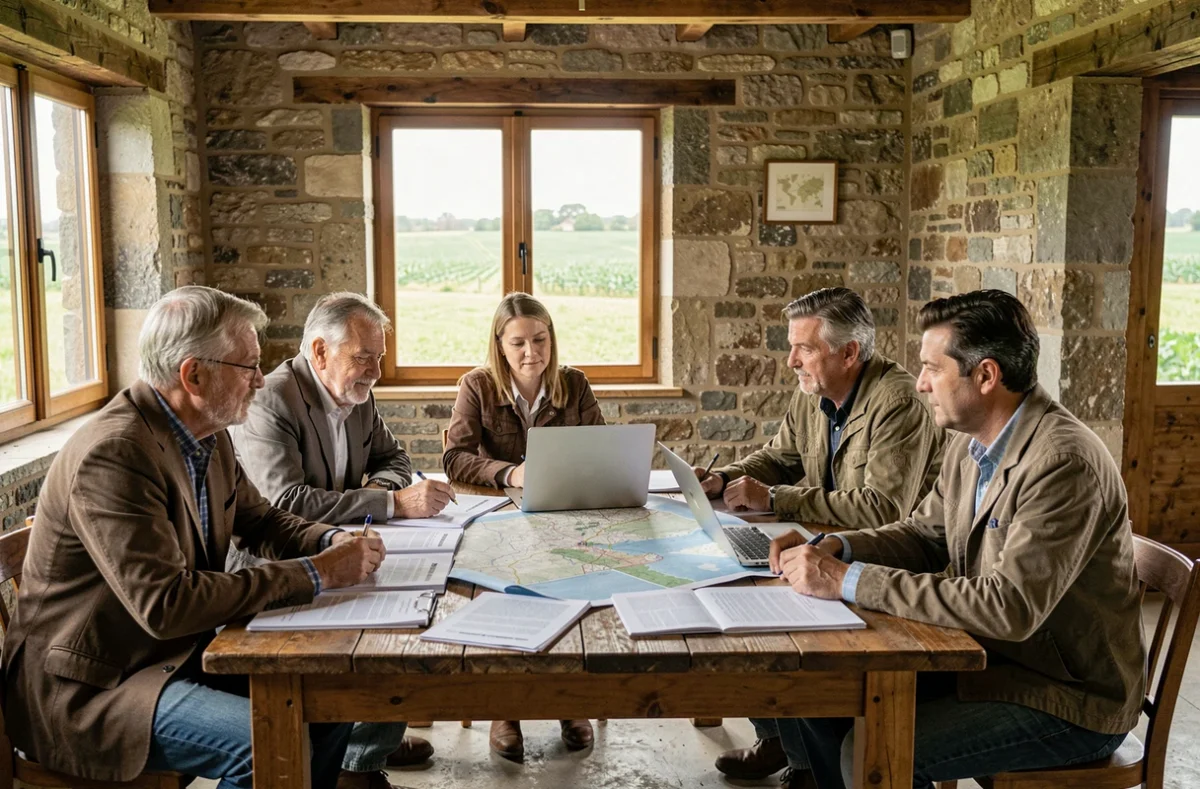
A community of municipalities is a public intercommunal cooperation establishment (EPCI) that brings together several neighboring municipalities around shared competencies. In rural areas, this structure takes on a particular dimension: it allows villages with a few hundred inhabitants to pool resources that none of them could finance alone.
Mandatory competencies and optional competencies chosen by the community of municipalities
The distinction between what a community of municipalities must do and what it can do often remains unclear for residents. Two blocks of mandatory competencies structure the functioning of each EPCI: spatial planning and economic development.
Spatial planning covers intercommunal urban planning documents, business zones, and the management of certain roadways. Economic development includes the creation and maintenance of artisan zones, support for local businesses, and the welcoming of companies in the territory.
Beyond this foundation, each community of municipalities chooses optional and discretionary competencies tailored to its context. A mountainous territory will not have the same priorities as a cereal plain. Early childhood, roadways, culture, sports, or waste collection are among the most frequently addressed areas, but nothing is automatic.
The example of Bellegardois illustrates this adaptability: a rural community of municipalities that organizes its services according to the concrete needs of its residents, as can be seen on cc-bellegardois.fr.
Water and sanitation in rural areas: a competency that has changed course
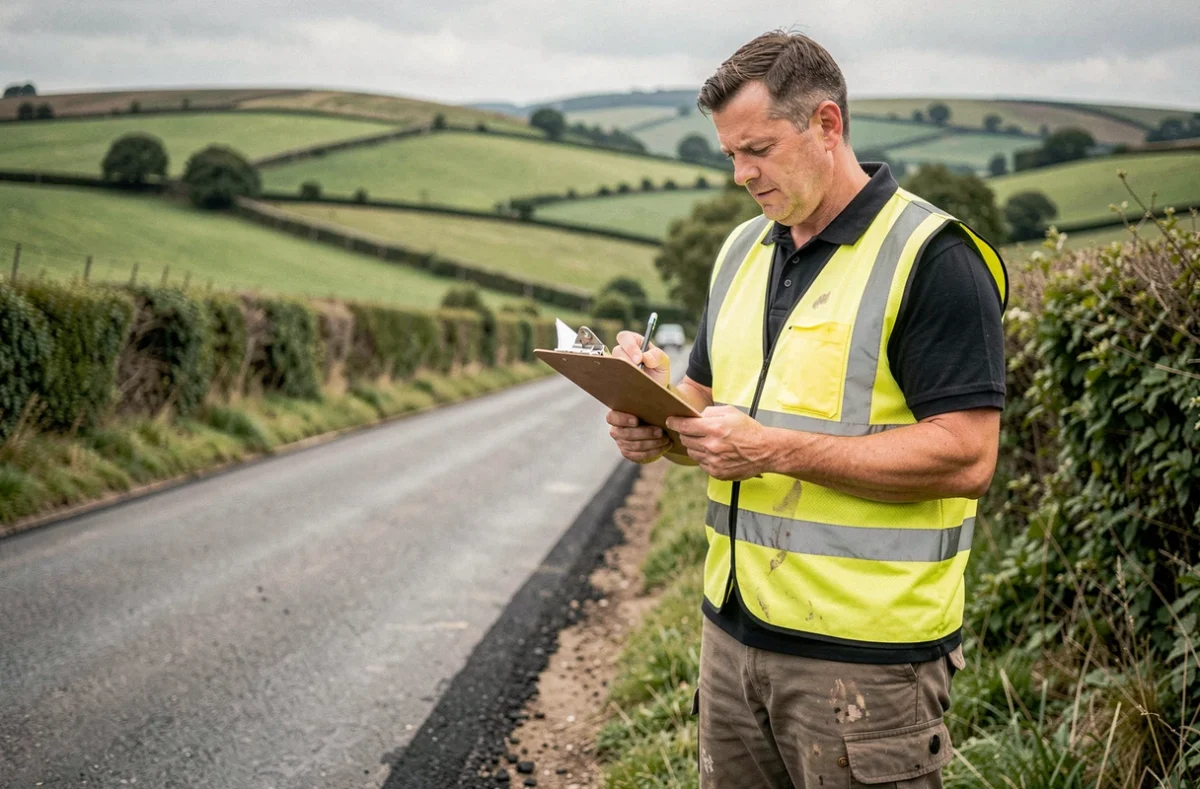
The management of water and sanitation has long been announced as an inevitable transfer to communities of municipalities. The law of April 11, 2025, has modified this trajectory. The mandatory transfer of water and sanitation has been abolished.
In practical terms, municipalities that had not yet transferred these competencies can now choose to retain them, entrust them to their intercommunal structure, or delegate them to a specialized union. Transfers that have already been made, however, remain in effect.
This flexibility is very important in rural areas. A drinking water network serving a few hamlets scattered over a vast territory is not managed like a dense urban network. The possibility of maintaining municipal or union management allows for local responsiveness, where a rigid transfer could have created distance between users and the manager.
Rural mobility: the growing role of communities of municipalities
The absence of traditional public transport is one of the markers of rural daily life. Communities of municipalities have become direct actors in trying to reduce this isolation, particularly through projects funded by the Green Fund.
The solutions deployed do not resemble urban bus lines. They are organized more as a bundle of mobility services adapted to dispersed needs:
- On-demand transport, activated by phone or digital reservation, to connect towns
- Solidarity transport, relying on volunteers who accompany people without vehicles to health services or shops
- Car-sharing and bike rentals (including electric) for commuting or trips to business zones
The assessment of the Green Fund confirms that communities of municipalities are among the main drivers of these projects in rural areas. This pragmatic approach, built with complementary small bricks, better responds to the reality of an extensive territory than a single transport line.
What a community of municipalities finances and what remains the responsibility of the municipality
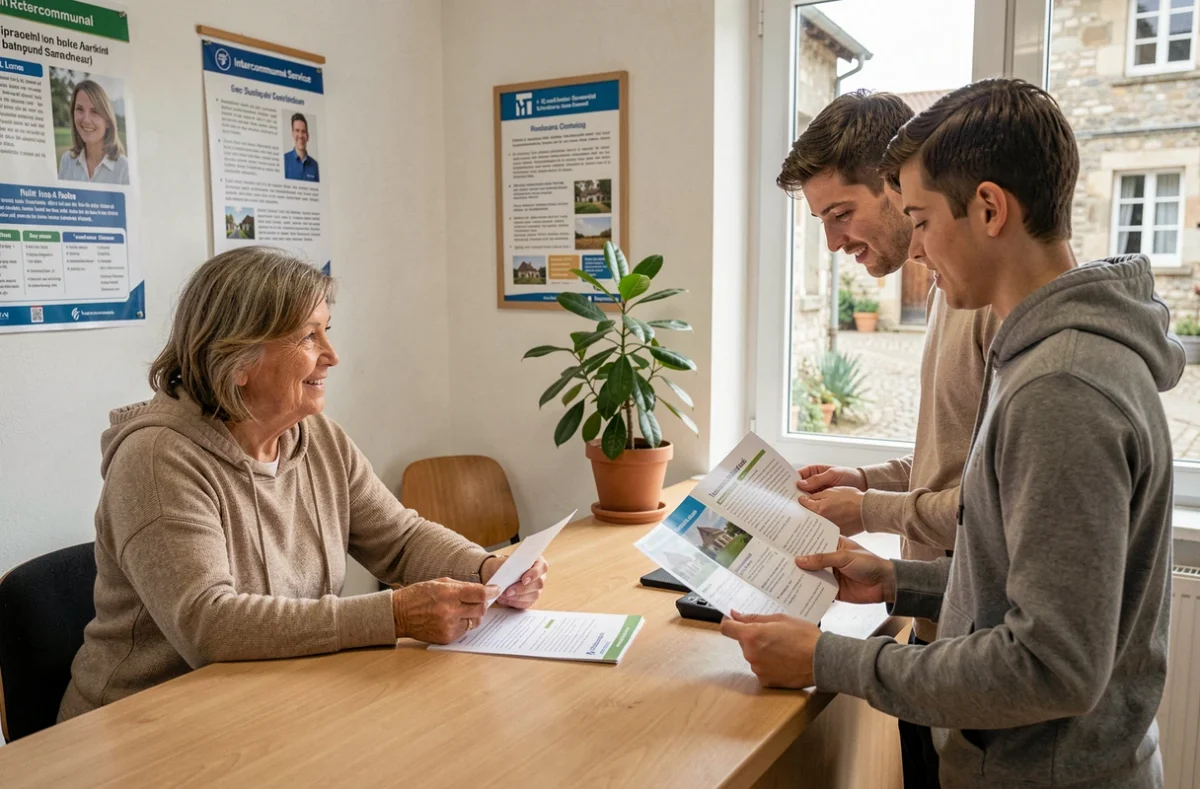
The financial distribution between the municipality and the intercommunal structure remains one of the least clear points for residents. In practice, the community of municipalities receives a share of local taxation (notably the territorial economic contribution) and receives grants from the State. These resources finance the competencies it exercises.
The municipality, for its part, retains its own budget for everything that does not fall under intercommunal responsibilities: civil status, maintenance of certain municipal buildings, cemeteries, public lighting (depending on the case). The mayor remains the local contact for these matters.
The boundary is not the same everywhere. An activity report from a community of municipalities may reveal the management of nurseries and media libraries, while a neighboring territory of comparable size leaves these services to the member municipalities. This variability depends on local political choices and available resources.
The most fragile rural municipalities benefit from a real leverage effect thanks to pooling. A village of a few hundred inhabitants could not, on its own, employ a building permit instructor or finance an efficient waste collection service. Intercommunal pooling makes services accessible that would be out of reach for a small isolated municipality.
Territorial engineering: the invisible competency of rural intercommunalities
Preparing a European grant application, responding to a State call for projects, designing an intercommunal local urban planning plan: these tasks require technical skills that most small municipalities do not possess internally.
The community of municipalities provides this territorial engineering, meaning the human and technical resources capable of transforming a local idea into a funded and realized project. Without this capacity, many initiatives would remain at the stage of intention.
This support function is all the more crucial as public funding increasingly relies on competitive project calls. A territory that does not have trained agents for preparing applications misses out on funding it would be entitled to. The community of municipalities partially corrects this inequality of access.
The community of municipalities in rural areas is not intended to replace the municipality but to complement what it can no longer ensure alone. The 2025 law on water and sanitation shows that this sharing of responsibilities continues to evolve, case by case, according to the realities of each territory.