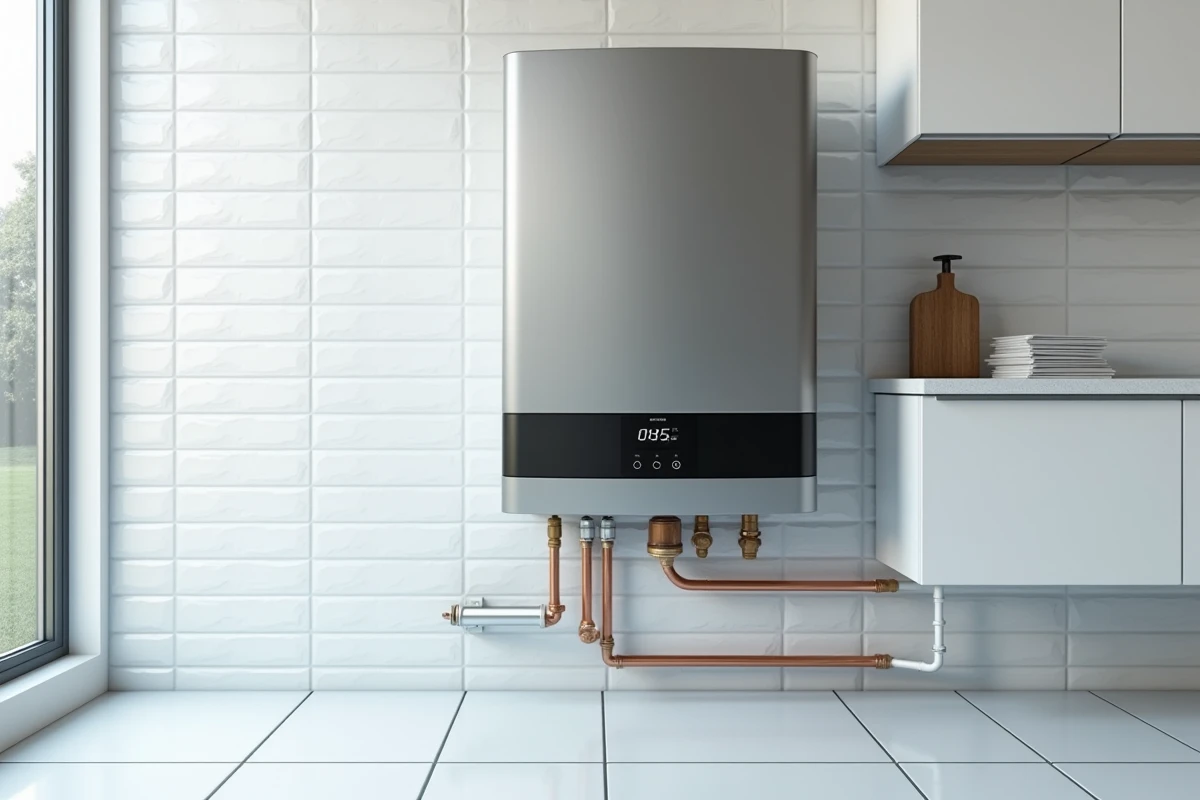
A high-end condensing gas boiler stands out from an entry-level model by its ability to finely modulate its power, integrate advanced connectivity protocols, and maintain high efficiency throughout its lifespan. Understanding these technical differences allows for targeting the right device according to the housing configuration, the volume of domestic hot water required, and current regulatory constraints.
Seasonal efficiency and power modulation: what separates the high-end
The most discriminating technical criterion for a condensing gas boiler remains the seasonal efficiency (ETAS). In premium models, this efficiency consistently exceeds the regulatory threshold set by the ErP directive, whereas entry-level boilers merely meet it.
Power modulation plays a direct role in this performance. A device capable of dropping to a low fraction of its nominal power avoids short cycling (repeated on/off), which degrades actual efficiency and wears out components. Frisquet, Viessmann, or De Dietrich boilers offer wide modulation ranges, sometimes up to a ratio of 1 to 10 in certain ranges.
This modulation has a concrete impact on the bill. In mid-season, when heating needs are low, a boiler that modulates low consumes less than a model that turns on at full power and then stops. Thermal comfort is also affected: the indoor temperature remains more stable.
To delve deeper into this topic, a comparison of high-end gas boilers detailing the specifications of each model allows for measuring these performance gaps.
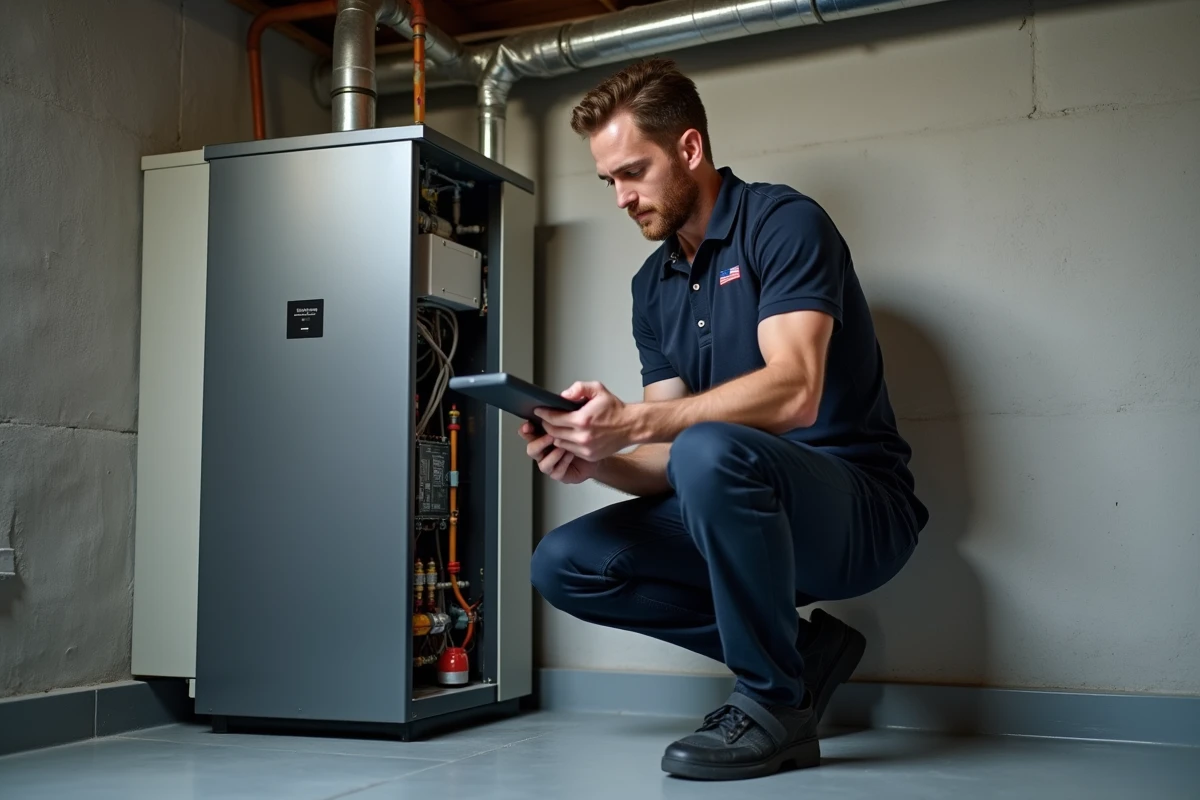
High-end condensing gas boiler: three brands to closely examine
Competitors often list eight or ten brands. Three manufacturers stand out clearly in the premium segment due to their manufacturing quality, availability of spare parts, and reliability reported by installers.
Frisquet: French manufacturing and stainless steel heat exchanger
Frisquet produces its boilers in France (Meaux, Seine-et-Marne). The stainless steel heat exchanger, present in the Prestige and Hydroconfort ranges, is more resistant to corrosion from acidic condensates than aluminum exchangers. The longevity of the exchanger determines the overall lifespan of the device.
The Frisquet service network relies on a network of internally trained technicians, which facilitates access to spare parts. This point weighs heavily on equipment designed to operate for more than a decade.
Viessmann: connectivity and integrated regulation
Viessmann integrated connectivity into its Vitodens boilers well before most of its competitors. The modulating regulation adjusts the supply temperature based on the outside temperature, measured by a dedicated sensor.
The Vitodens 200-W range offers a remote control interface via an app. This control allows for programming precise time slots and monitoring gas consumption in real-time.
De Dietrich: hybrid positioning
De Dietrich offers hybrid systems combining condensing gas boilers and heat pumps. This architecture allows for automatic switching between the two energy sources based on the outside temperature, reducing gas consumption when conditions are favorable for the heat pump.
Hybrid gas-heat pump systems represent a strong trend among premium manufacturers, who anticipate the gradual tightening of regulations on gas heating in new constructions.
Technical selection criteria for a high-performing gas boiler
Beyond the brand, several technical parameters determine whether a high-end model truly fits the housing.
- The nominal power must be sized by a professional based on the living area, thermal insulation, and volume of domestic hot water. An oversized device modulates poorly and loses efficiency.
- The type of domestic hot water production (instantaneous, micro-accumulation, or integrated tank) influences user comfort. Micro-accumulation offers a good compromise between immediate flow and reduced bulk.
- Compatibility with external sensor regulation and a connected thermostat conditions the real optimization of energy consumption throughout the heating season.
- The noise level during operation, often overlooked, varies significantly from one model to another. On a wall-mounted boiler installed in an open kitchen, a few decibels of difference can change daily life.
These criteria interact with each other. A silent model that is poorly sized will still be disappointing. Sizing by a qualified RGE installer remains the most determining factor in the success of a boiler replacement project.
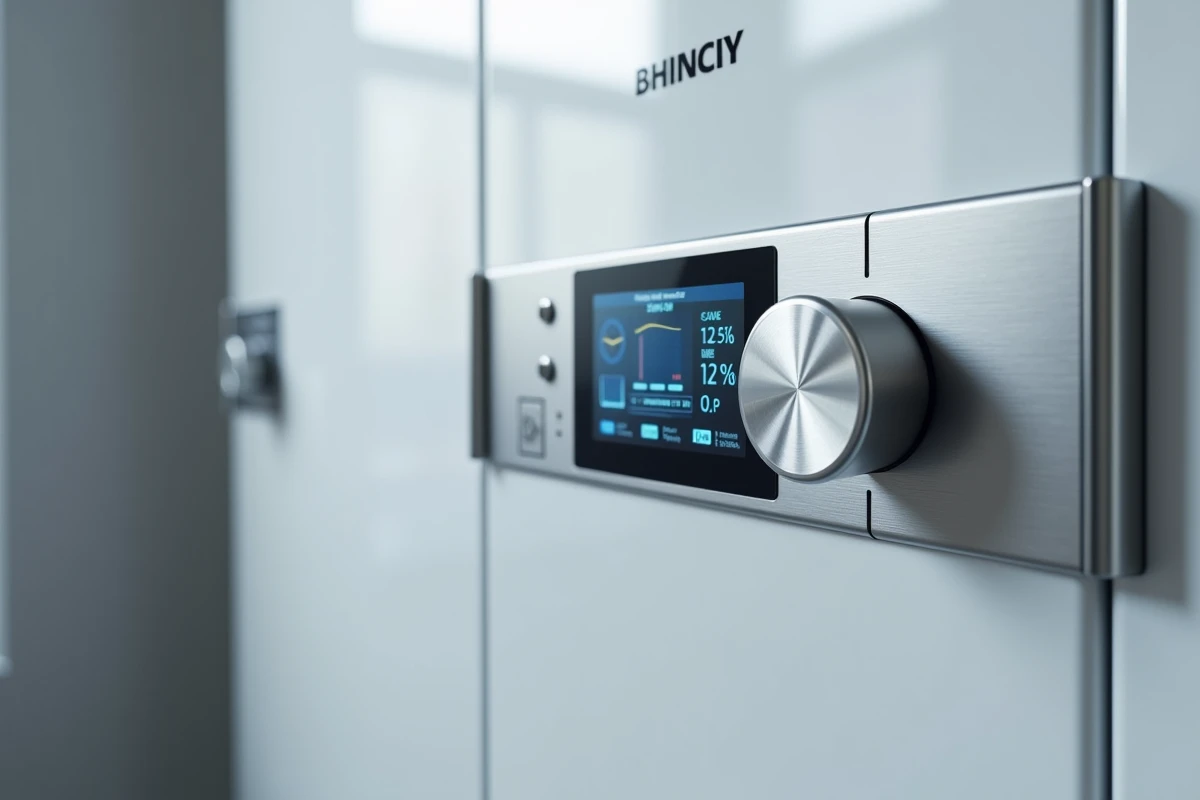
Gas regulations and high-end investment in 2026
Since 2022, the installation of gas boilers in new constructions has been subject to increasing restrictions related to RE 2020. New buildings must meet carbon emission thresholds that make heating exclusively with gas difficult to justify.
In renovation, the condensing gas boiler remains permitted and eligible for certain aids (MaPrimeRénov’ under conditions), but the framework is evolving regularly. Investing in a high-end model is primarily justified when the housing is already connected to natural gas and insulation has been addressed beforehand.
A hybrid gas-heat pump model better protects the investment against regulatory changes, as it reduces dependence on gas while keeping the boiler as a backup during cold peaks.
The choice of a high-end gas boiler in 2026 relies less on the prestige of a brand than on the compatibility between the modulation range of the device, the sizing of the system, and the medium-term energy strategy of the housing. Manufacturers like Frisquet, Viessmann, and De Dietrich offer solid guarantees, but only a prior thermal diagnosis can validate the relevance of the investment.